Specification sheet
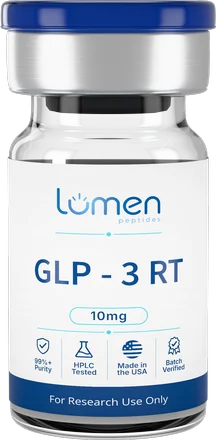
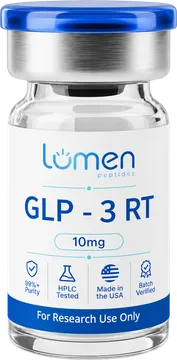
GLP-3 RT
- Molecular weight
- 4731.3g/mol
- Formula
- C221H342N46O68
- CAS number
- 2381089-83-2
- Type
- Synthetic peptide
- Form
- Lyophilized powder
- Sizes
- 10mg · 30mg · 60mg

Research access
Lumen supplies research compounds to qualified researchers and laboratories for in-vitro use. Confirm once to enter.
By entering you affirm the statement above is true. Products are not for human or veterinary use, not for diagnostic procedures, and have not been evaluated by the FDA.
99.9%HPLC purity
Metabolic / GLP-1 Research
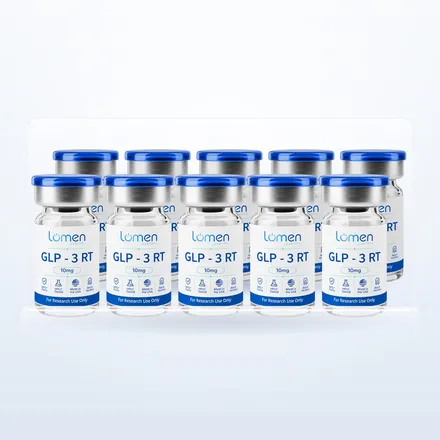
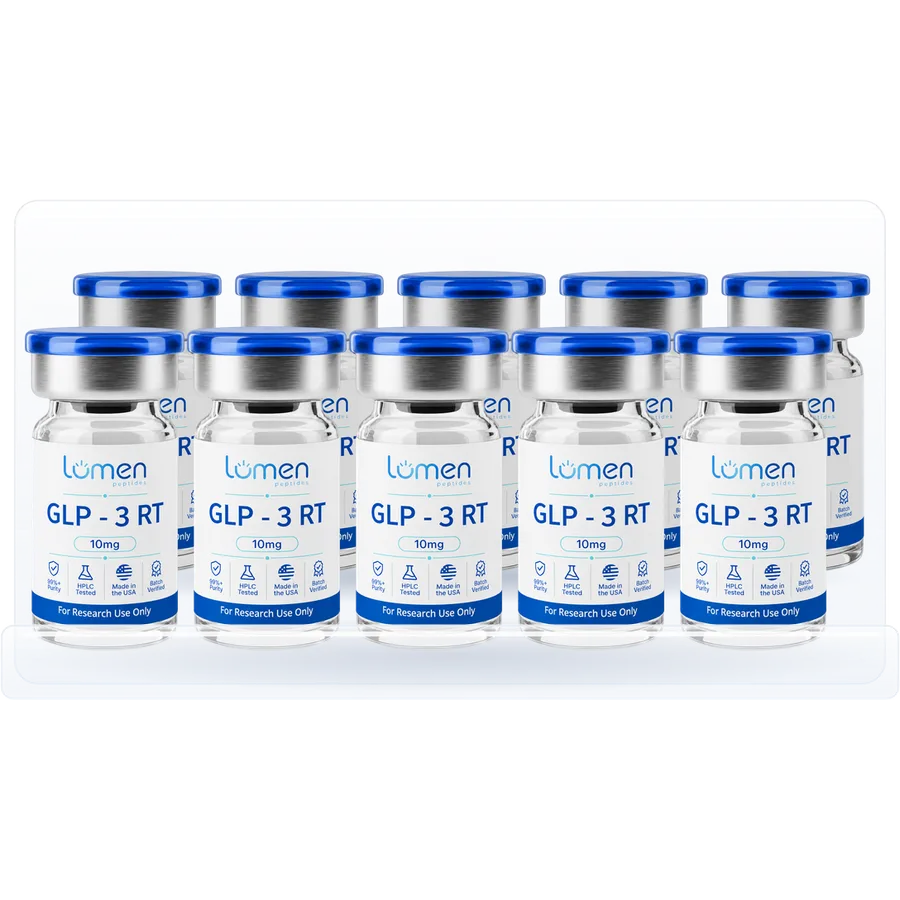
Ten GLP-3 RT vials in one case.
$300.0010 × 10mg vials
Ten vials in one case, $30.00 per vial.
Researchers also added
Mix and match: Buy 1, get 1 free pairs any two vials in your cart. Research use only.
The compound
GLP-3 RT is a single-molecule triple agonist engaging the GIP, GLP-1 and glucagon receptors. The added glucagon-receptor arm is studied for its contribution to energy-expenditure endpoints in preclinical adiposity models. A next-generation research compound of intense current interest.
Specification sheet
Where it is studied
Simultaneous activity at three receptors is the defining feature in comparative pharmacology studies.
Added glucagon-receptor activity is studied for effects on energy expenditure in preclinical models.
Explored in laboratory adiposity endpoints. Illustrative, not a human efficacy claim.
In the lab
GLP-3 RT is a single peptide that activates the GIP, GLP-1 and glucagon receptors. In laboratory models it shifted white fat toward fatty acid oxidation with less fibrotic signaling, and lowered NLRP3 and fibrosis markers in kidney tissue.
Compound
GLP-3 RTSingle-peptide GIP, GLP-1 and glucagon receptor agonistWhite adipose tissue
Endpoint studied
Less fibrotic remodelingLower lipogenesis, more fatty acid oxidation and mitochondrial function, less inflammatory and fibrotic signaling.Li 2026 · PMID 41964043 (opens PubMed in a new tab)Kidney tissue
Endpoint studied
Less renal inflammationLower NLRP3, caspase-1 and TNF-alpha, and less fibronectin, alpha-SMA and collagen I in kidney tissue.Ma 2025 · PMID 39212900 (opens PubMed in a new tab)Research history
4 milestones, each linked to its PubMed record.
2023
STAR Protocols
A protocol to grow human fat cells from preadipocytes and measure lipolysis induced by GLP-3 RT or GIP.
PubMed · PMID 37178114 (opens in a new tab)2025
Endocrine
In a diabetic kidney disease model it lowered NLRP3, caspase-1 and TNF-alpha, plus fibronectin, alpha-SMA and collagen I.
PubMed · PMID 39212900 (opens in a new tab)2025
American Journal of Physiology. Gastrointestinal and Liver Physiology
In a fructose-driven steatohepatitis model it lowered ALT, liver triglycerides, cholesterol and inflammatory markers.
PubMed · PMID 41056349 (opens in a new tab)2026
Diabetology & Metabolic Syndrome
Multi-omics in an obesity model: less lipogenesis and fibrotic signaling, more fatty acid oxidation and mitochondrial function.
PubMed · PMID 41964043 (opens in a new tab)Laboratory research only, cited for research context. Not a claim about use in people.
Catalog peptides are specified at 99%+ identity purity. Each lot is verified by an independent laboratory using HPLC and mass spectrometry, and the results are published in that lot's Certificate of Analysis.
A COA is the lab document issued for a specific production lot. It records the compound's identity confirmation, measured purity and the lot number, so the vial on the bench can be traced back to its test results.
Orders placed before the daily cutoff ship the same or next business day from a US facility. Lyophilized peptides are stable in transit and do not require cold shipping.
L-H2O is a sterile, USP-grade laboratory solvent containing 0.9% benzyl alcohol. It is a bench accessory, not a peptide, and carries no HPLC purity claim or COA.
Research use only. Sold strictly for in-vitro laboratory research by qualified professionals. Not for human or veterinary use, not for diagnostic or therapeutic procedures, and not evaluated by the FDA.